 Skip to content

Mastering Poker Bluffs: How to Read the Table and Win More Hands
Poker is a family of card games where players wager on the strength of their hidden hands, blending skill, probability, and psychology to outplay opponents across betting rounds. This strategic foundation makes it a uniquely engaging test of decision-making, as each hand requires you to calculate pot odds, read betting patterns, and manage risk under uncertainty. Beyond entertainment, poker sharpens your ability to analyze incomplete information and maintain emotional discipline, which you can directly apply to real-world negotiation and financial choices. Mastering the core mechanics of hand rankings and betting structures is the essential first step toward leveraging these cognitive benefits.
Why This Card Game Keeps Players Coming Back for More
Poker’s enduring pull comes from its unique blend of skill and psychological depth, where every hand offers a fresh puzzle. Unlike games with fixed outcomes, each round rewards patient observation and calculated risk, making every session a test of adaptability. The continuous strategic challenge emerges from reading opponents, managing variance, and timing bluffs—no two hands play identically. This dynamic feedback loop keeps players engaged because success hinges on learning from losses and refining tactics, not just luck. The social tension at the table, where every decision carries real consequence, creates a compelling reason to return: the chance to outthink others and master an ever-unfolding game of incomplete information.
The Perfect Mix of Luck and Calculated Risk
Every hand begins with chance, but the decision to fold, call, or raise is pure arithmetic. The perfect mix of luck and calculated risk emerges when you weigh pot odds against implied odds, then act despite incomplete information. You cannot control the river, but you can control the price you pay to see it—so you force opponents to overpay for their draws while you chase only profitable ones. *A losing session often means you took the right risks at the wrong variance, not that the math failed you.* The thrill comes from knowing that a single bluff can turn a 20% chance into a 100% win, yet only if your read is sharper than the dealer’s shuffle. That tension—between what you know and what you dare—is why the game never feels solved.
Luck deals the cards, but calculated risk decides who stays—and who walks away richer.
How Playing Sharpens Your Decision-Making Skills

Each hand forces you to weigh incomplete information, calculating pot odds against opponent tendencies before committing chips. This constant pressure trains you to separate emotional impulses from statistical realities, a core component of decisive poker thinking. You learn to categorize situations quickly—fold, call, raise, or bluff—based on probability shifts, not gut feelings. Over time, your brain builds faster heuristics for risk assessment, recognizing patterns of aggression or weakness mid-hand. The most valuable gain is the ability to revise a decision instantly when new cards or betting actions contradict your initial read. Every session becomes a real mahjong repetition loop for evaluating trade-offs under uncertainty, making future choices more precise and less reactive.
Poker sharpens decision-making by forcing rapid, probabilistic risk evaluation, emotional detachment, and adaptive re-calibration of choices under incomplete information.
Understanding the Core Hands and Their True Value
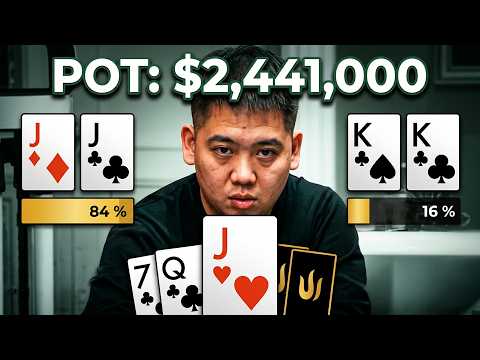
The first time you look down at pocket jacks, you think you’ve found gold—until the flop brings an overcard and your stomach drops. Understanding the core hands means seeing beyond their shiny names: a hand’s true value shifts with position, opponent tendencies, and the story the board tells. Premium pairs like aces and kings are starting points, not guarantees—they demand aggression preflop but morph into vulnerable holdings when the community cards stretch toward straights or flushes. Suited connectors earn their worth through implied odds, not showdown equity, because their payoff only materializes when you flop a draw that can be disguised. The nuanced truth is that no hand is inherently strong; its value lives in how well it fits the specific battle you’re fighting. So you fold the ace-queen offsuit against a tight 3-bet, and you call with the baby suited ace against a loose limper—each choice rewriting what “good” means.
From High Card to Royal Flush: What Actually Beats What

Starting from the bottom, a high card hand only wins when no one else pairs up, so your kicker’s rank is everything. A single pair beats that, two pair tops it, and three of a kind crushes both. From there, a straight (five sequential cards) outranks trips, while a flush (five suited cards) beats a straight—but remember, a straight flush, like 9-10-J-Q-K of hearts, sweeps them all. The royal flush, the unbeatable ace-high straight flush, sits alone at the top. Don’t forget that a wheel (A-2-3-4-5) is the lowest straight, not a high one.
Ranking climbs from high card through pairs, trips, straight, flush, full house, four of a kind, then straight flush, with the royal flush as the ultimate winner.
Why Position at the Table Matters More Than Your Cards
Your starting hand is a blueprint, but your seat at the table is the contractor who actually builds the pot. Being in a late position lets you watch every opponent’s hesitation, bet size, and tell before you commit a single chip, turning marginal cards into profitable bluffs and premium hands into traps. Early position, by contrast, forces you to act blind, turning pocket jacks into a liability against unknown aggression. The true value of a hand is not its rank, but the number of informed decisions you can make with it. This is the core of strategic advantage through table position: leverage your seat to control the flow, steal blinds, and extract maximum value from superior hands that are forced to act first.

Your First Live Game: What to Expect at the Felt
Essential Etiquette Every New Player Should Know
For a new player, table etiquette is less about formality and more about keeping the game fair and efficient. Always act in turn, never checking your cards face-down before the action reaches you, as this can mislead opponents. When folding, push your cards to the dealer rather than tossing them into the middle. Keep chips stacked visibly, and avoid “string betting” by declaring your action or moving a single, clear amount in one motion. Do not discuss the hand while it’s live, even if you’ve folded. These habits maintain game flow and prevent accidental angle-shooting, which builds trust. Proper live poker conduct directly reduces friction at the table.
Question: Is it acceptable to ask the dealer for a “count” of a bet as a new player?
Answer: Yes, politely asking “How much is it?” is always acceptable. Dealers are required to announce bet sizes, and verifying the amount prevents mistakes.
Reading the Table: Chips, Tells, and the Dealer’s Rhythm
When you sit down, don’t just stare at your own cards—start reading the table’s rhythm by watching chip stacks stack up or shrink during each orbit. Notice how a player counts out a call: quick and casual means strength, while slow, deliberate chip sliding often signals a tough decision. Also, track the dealer’s tempo—a fast, monotone rhythm usually means action is routine, but a sudden pause or a lingering glance at the board can hint at a developing situation. *Your best tells are often the tiny hesitations between the dealer’s snap of the wrist and your opponent’s final chip toss.*
- Watch chip sizing: oversized bets on dry boards often mean protection, not value.
- Look for hand-over-mouth tells when the dealer flips the turn card.
- Note how players stack chips—neat stacks suggest discipline, messy piles often indicate tilt.
- Listen for the dealer’s verbal cues like “action” to gauge table flow.
Choosing the Right Variant for Your Playing Style
Choosing the right poker variant hinges on aligning game mechanics with your natural tendencies. If you thrive on calculated aggression and reading opponents, No-Limit Texas Hold’em rewards post-flop skill and psychological pressure. For a more structured, mathematically rigorous approach, Pot-Limit Omaha offers complex hand combinations and draws, suiting players who excel at equity calculations. Conversely, if you prefer patience and positional awareness, Seven-Card Stud demands strong memory and observation rather than community-card speculation. Your bankroll volatility tolerance is the critical filter: high-variance games like Omaha can decimate a short stack, while low-stakes Fixed-Limit games allow gradual learning. Assess whether you enjoy multi-street decision-making or preflop simplicity—then match the variant’s betting structure and hand complexity to your risk profile and time commitment. Ultimately, consistency in one format builds deeper expertise than sporadic play across many.
Texas Hold’em vs. Omaha: Key Differences in Strategy
In Texas Hold’em, preflop hand strength is relatively binary—pairs and broadways drive most raises—while Omaha demands you evaluate four-card combinations for coordinated draws and nut potential. Key differences in strategy emerge postflop: Hold’em rewards bluffing with few blockers or thin value bets, but Omaha’s four-card hands reduce bluff equity since opponents often connect with the board. Starting-hand selection in Omaha prioritizes double-suited or connected rundowns (e.g., 9-8-7-6), whereas Hold’em tolerates offsuit high cards. Position matters more in Omaha due to multiway pots and re-draws; you must control pot size with marginal made hands. In Hold’em, a single pair can win unimproved; in Omaha, top pair rarely survives showdown.
- In Omaha, always count your exact outs for both nut and second-nut draws before committing.
- In Hold’em, narrow your range to premium pairs and suited connectors from early positions.
- In Omaha, avoid overplaying non-nut flushes or straights—they are often dominated.
- In Hold’em, use position to steal blinds with any two suited cards, but never do this in Omaha.
Low-Stakes Stud and Draw Games for Casual Evenings
For casual evenings, low-stakes stud and draw games prioritize social interaction over complex decision-making, making them ideal for mixed-skill groups. Five-card draw’s simple hand-ranking focus lets beginners grasp bluffing quickly, while seven-card stud’s fixed betting structure keeps action predictable and conversational. Low-stakes stud and draw games thrive with small ante-only pots, reducing pressure to calculate pot odds and encouraging speculative play. Limit betting prevents one aggressive player from dominating, and the slower pace allows side chatter between streets. To keep evenings relaxed, use a dealer’s-choice rotation, alternating between draw variants like triple-draw lowball and stud variations such as razz, ensuring novelty without strategic overload.
- Ante-only structures minimize bankroll stress and speed up deal cycles.
- Dealer’s choice rotation sustains engagement without requiring deep rule mastery.
- Limit betting caps losses, fostering reckless-but-friendly calls.
- Draw games reward patient hand-reading, while stud emphasizes memory of exposed cards.
Five Immediate Tips to Avoid Rookie Mistakes
You sit down, cards in hand, and the first rookie mistake hits before you even bet: playing too many hands. Tighten your starting range immediately—fold weak aces and suited junk, because patience builds your stack faster than curiosity drains it. Second, stop chasing every draw; calculate pot odds before calling, or you’ll pay for cards that never come. Third, control your emotions after a bad beat—tilting turns a small loss into a massive one, so take a breath and reset. Fourth, position is power; play more hands from late seat and fewer from early, where you act blind. Finally, never bluff without a plan—random aggression gets called down, but a story with a credible turn bet makes opponents fold. These five fixes separate grinders from busts.
Bankroll Basics: Setting Limits You Can Actually Keep
Your bankroll isn’t a scoreboard—it’s your survival kit, so set limits that survive contact with real play. Divide your total poker funds into fixed buy-in units, never risking more than 5% per session, and cap losses at two units before you walk. This creates a hard floor that protects you from tilt-driven reloads, turning discipline into a habit rather than a hope. Track every session in a simple spreadsheet; visibility forces honesty about leaks. Bankroll limits only work when they’re automatic, so pre-commit by leaving your card at home and using only cash or a dedicated e-wallet. If you double your roll, raise stakes gradually—never jump because you’re feeling lucky.
- Stick to 5% per session and a two-unit loss cap
- Log every win and loss to expose real patterns
- Separate poker funds from living money physically
- Move up stakes only after a 20% bankroll increase
When to Fold Early vs. When to Chase the Pot
Fold early when your hand lacks equity against the visible board and likely ranges, especially out of position or against aggressive betting. Chasing the pot is only correct when you hold a strong draw with proper pot odds and implied odds, not when you’re hoping for a miracle card. A key rule: if the call costs more than 10% of your stack and you’re drawing to less than eight outs, muck it. Discipline in folding marginal hands preserves chips for profitable spots. Re-evaluate on later streets, but never let sunk costs justify a bad call. The pot you’ve already invested is gone; only future chips matter.
- Fold if your draw has fewer than eight outs and the bet exceeds pot odds.
- Chase only when opponent’s range is wide and your implied odds are strong.
- Check or fold on the turn if your draw missed and the pot is unprotected.
- Never chase a gutshot straight draw with a large bet against a tight player.
How to Spot a Bluff Without Overthinking It
To spot a bluff without overthinking it, lock onto timing tells that break rhythm. If a player snap-calls or bets instantly after a scare card hits, they’re often hiding weakness, not strength. Conversely, a deliberate pause before a big raise usually signals genuine hand strength—actors need a beat to rehearse. Watch the chip motion: trembling hands or overly precise stacks indicate nerves, but a careless, quick shove is more likely a value bet. Set a rule: once you’ve registered one clear tell, act on it within three seconds. If you hesitate, you’re inventing patterns. Bet-sizing is your final filter—an oversized raise that mirrors the pot’s previous rhythm is rarely a bluff. Trust the first read; your gut counts the math faster than your conscious mind.
- Compare bet size to prior streets.
- Check for a delayed reaction to the river card.
- Act on the first tell you notice—don’t re-evaluate.